


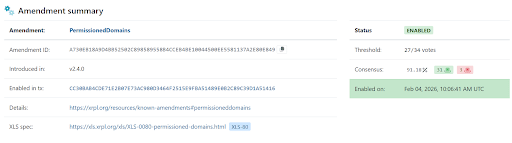
The XRP Ledger has just activated one of its most anticipated upgrades. According to XRPScan, the Permissioned DEX amendment was enabled on February 18, 2026 at 10:58:10 AM UTC after 82.35% of validators voted in favor.
This is the second amendment to go live on the Ledger in less than a week, following the activation of the Token Escrow (XLS-85) amendment on February 12. XRP enthusiasts are happy with the development, as evidenced by various posts on the social media platform X. However, what does a Permissioned DEX actually mean for everyday users?
Permissioned Dex Is Bigger Than A Simple Upgrade
Ripple enthusiasts and executives have repeatedly stated that the largest obstacle to institutional adoption of decentralized exchanges is compliance. Without permissioning tools, even Ripple itself could not fully utilize certain XRPL functionalities in regulated environments.
A Permissioned DEX is still a decentralized exchange, but with controlled access. A Permissioned DEX is where anyone can trade freely, but creators of the DEX restrict participation to verified entities. This means that banks, payment providers, and regulated financial institutions can take advantage of a Permissioned DEX to trade, provide liquidity, and settle transactions inside an environment where all participants are known and approved.
Decentralized networks like the Ledger are permissionless, meaning anyone can participate without authorization or approval from a gatekeeper. However, as nice as that may sound, the reality behind this structure is that traditional financial institutions cannot transact on open systems with anonymous counterparties due to compliance, AML, and regulatory obligations. They must know who they are trading with, maintain audit trails, and prevent exposure to illicit activity. A permissioned environment solves that barrier without removing the decentralized foundation of the ledger itself.
The Ledger already had built-in DEX functionality, fast settlement, low fees, and deterministic execution. The new amendment adds the compliance layer that large financial institutions need before deploying huge amounts of capital into the XRP ecosystem.
What Does This Mean For XRP Users?
Therefore, the launch of Permissioned Dex on the XRP Ledger is another obstacle to mass institutionalization that has been removed. According to an enthusiast known as Nick on the social media platform X, once the market structure bill is passed this year, then every other single obstacle to mass institutionalization of the Ledger will be removed.
According to another analyst on X known as Stern Drew, the upgrade is huge because permissioned liquidity unlocks institutional participation, the missing bridge between traditional finance and blockchain rails. This is expected to be reflected in the price action of the altcoin moving forward.
However, the analyst noted that it might take time for institutions to actually deploy liquidity until the CLARITY ACT and DNAOnChain’s zk-credential system go live. Nonetheless, the first permissioned offer has already been created on the XRP DEX.
Featured image from Adobe Stock, chart from Tradingview.com

Editorial Process for bitcoinist is centered on delivering thoroughly researched, accurate, and unbiased content. We uphold strict sourcing standards, and each page undergoes diligent review by our team of top technology experts and seasoned editors. This process ensures the integrity, relevance, and value of our content for our readers.


