

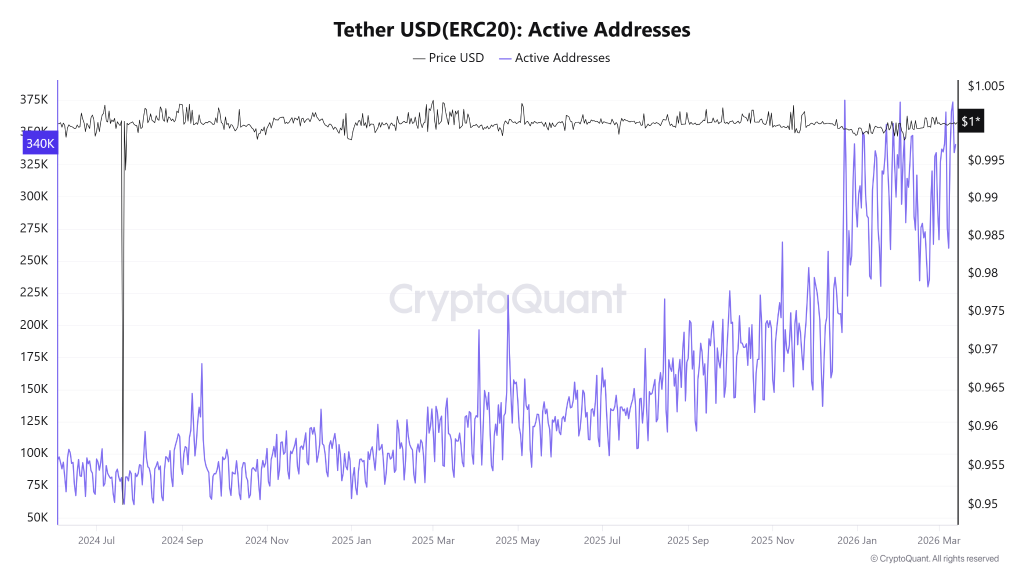
Something strange is happening with USDT, and it’s not the kind of shift traders and investors usually celebrate. On the surface, Ethereum’s USDT activity looks vibrant. Active addresses recently surged to 340,000, a level that normally screams strong network engagement.
But digging a little deeper and the story changes fast. This isn’t a speculative frenzy. Instead, it reflects a major pivot in how USDT is being used during the March 2026 Hormuz Crisis.
As geopolitical tensions disrupt traditional banking rails, stablecoins have quietly stepped in to fill the gap. Cross-border payments, emergency transfers, and quick settlements in fiat are increasingly happening through stablecoin rails rather than banks. In other words, the token that once fueled exchange trading desks is now doing something far more practical. And that shift is draining liquidity from where markets need it most.
USDT Leaves Exchanges as Users Build Private War Chests
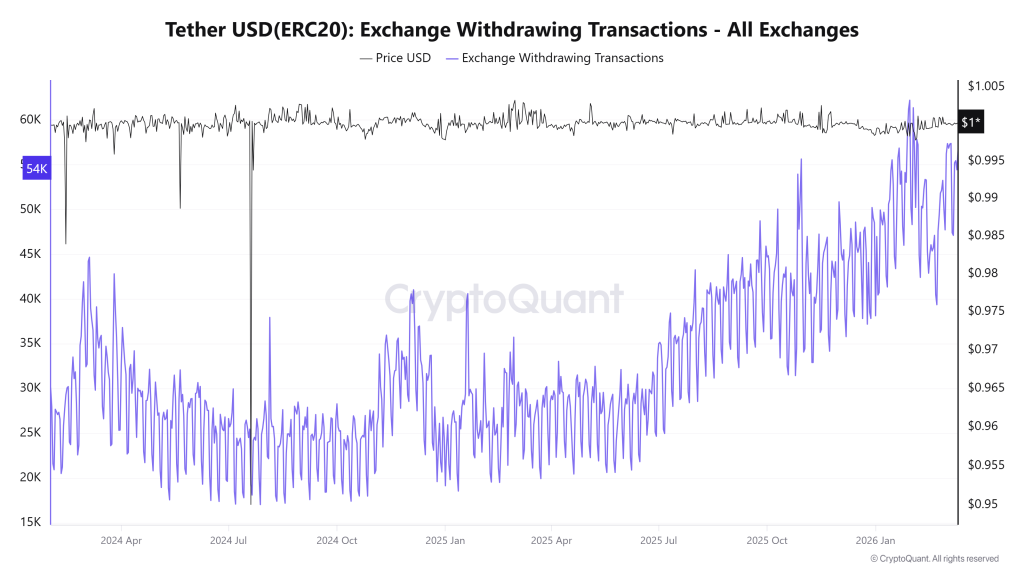
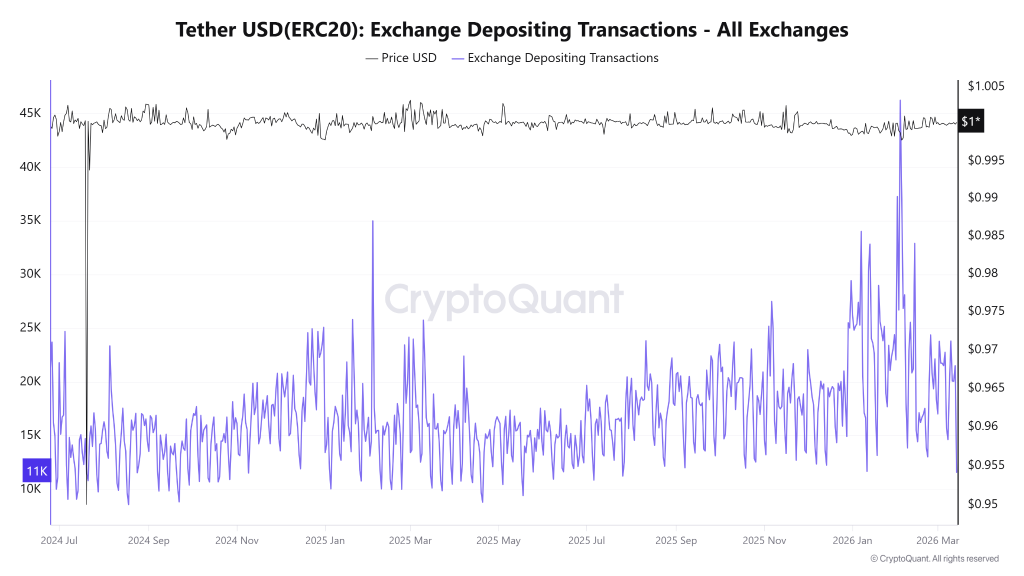
The imbalance is striking. Exchange data shows elevating withdrawal transactions, compared with declining depositing transactions with recent just 11,000 deposits recorded. Users aren’t simply trading less; they’re actively pulling funds into private custody wallets or may be in fiat.
Why? Because when geopolitical instability enters the equation, trust becomes fragile.
Investors appear to be prioritizing self-sovereign storage over the perceived risks of leaving assets on centralized platforms. In uncertain environments, holding funds directly often feels safer than relying on an exchange infrastructure tied to global financial systems. So while wallets are filling up, exchange reserves are shrinking.
Falling Exchange Reserves Create Thin Market Conditions
Well, here’s the uncomfortable part. Exchange-side stablecoin reserves have dropped in last three months and in march it fell more to $50.6 billion, leaving noticeably less liquidity sitting on order books. Markets rely heavily on stablecoins like USDT as the settlement layer for trades.
When those reserves shrink, the cushion that normally absorbs large sell orders gets thinner. And thin markets behave differently.
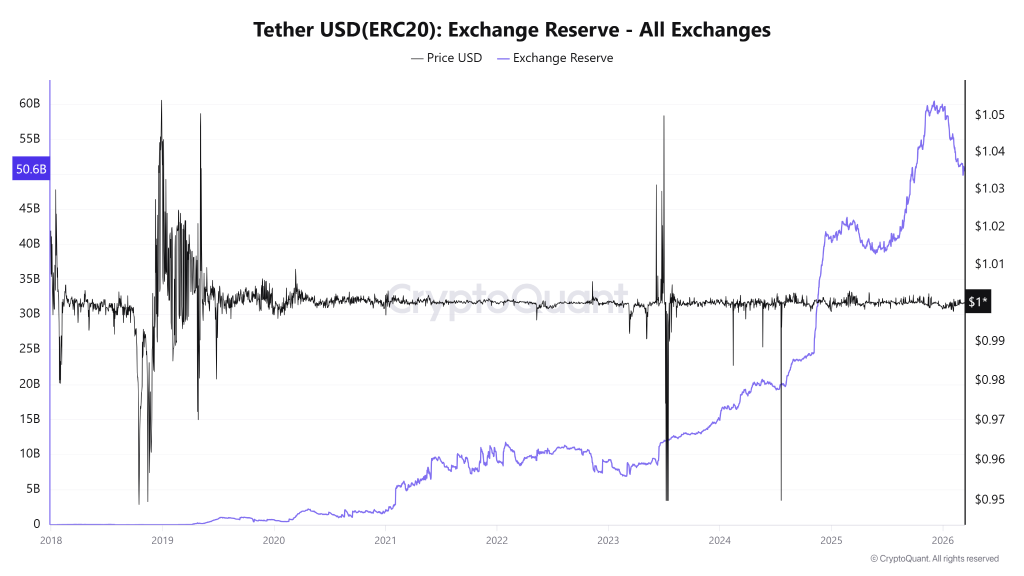
Without a deep pool of liquidity, even moderate liquidations can cause sharp price slippage. Moves that would normally be absorbed quietly by order books suddenly ripple across the market. In other terms, the engine is still running but the oil level is dropping.
Prolonged Hormuz Crisis Could Intensify USDT Liquidity Drain
That said, if the Strait of Hormuz blockade continues the global crisis will worsen and that could lead to rise in withdrawal of stablecoins. As long as global banking routes remain delayed or uncertain, USDT will likely continue functioning as a fast settlement layer outside the traditional financial system.
That creates a tricky environment for crypto markets. With less stablecoin liquidity available on exchanges, major assets from BTC and ETH to XRP could face increased vulnerability to volatility-driven swings. In that scenario, a routine correction could turn into something deeper simply because the usual buying power isn’t sitting on platforms ready to stabilize prices.
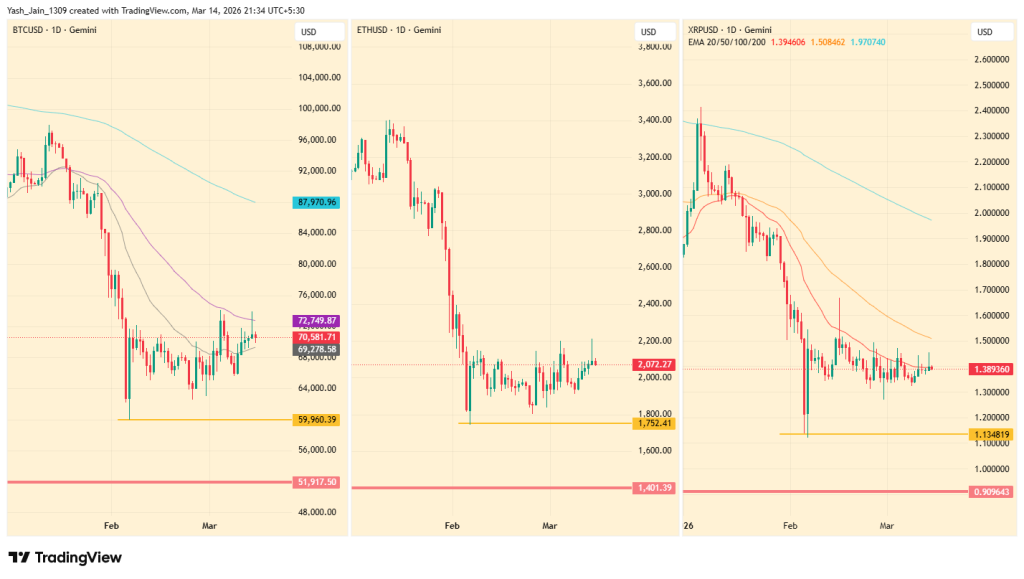
And right now, the shrinking exchange reserves suggest one thing: USDT isn’t just moving around the market, it’s quietly leaving it.
Trust with CoinPedia:
CoinPedia has been delivering accurate and timely cryptocurrency and blockchain updates since 2017. All content is created by our expert panel of analysts and journalists, following strict Editorial Guidelines based on E-E-A-T (Experience, Expertise, Authoritativeness, Trustworthiness). Every article is fact-checked against reputable sources to ensure accuracy, transparency, and reliability. Our review policy guarantees unbiased evaluations when recommending exchanges, platforms, or tools. We strive to provide timely updates about everything crypto & blockchain, right from startups to industry majors.
Investment Disclaimer:
All opinions and insights shared represent the author’s own views on current market conditions. Please do your own research before making investment decisions. Neither the writer nor the publication assumes responsibility for your financial choices.
Sponsored and Advertisements:
Sponsored content and affiliate links may appear on our site. Advertisements are marked clearly, and our editorial content remains entirely independent from our ad partners.


