

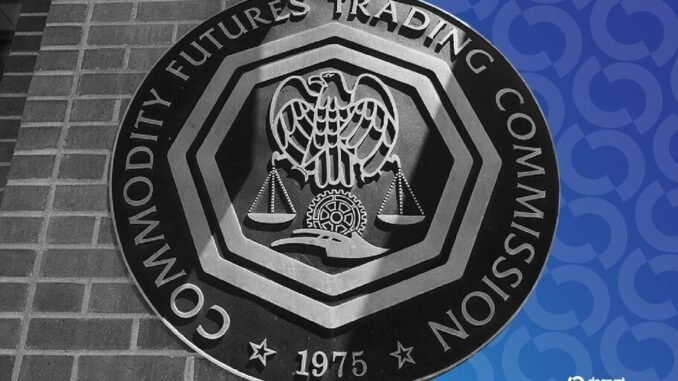
The U.S. Commodities Futures Trading Commission issued new guidance on Thursday for foreign firms, saying they now have a pathway to operating legally in the U.S.
The regulator said in a blog post that it had put out new guidance regarding its foreign board of trade registration framework, which would apply equally to both traditional and crypto markets.
In a statement, Acting CFTC Chair Caroline D. Pham described the move as a way to dispel a lack of regulatory clarity marked by “regulation through enforcement” in recent years—a strategy employed by former SEC Chair Gary Gensler, under President Joe Biden, that had been widely criticized across the crypto industry.
“American companies that were forced to set up shop in foreign jurisdictions to facilitate crypto asset trading now have a path back to U.S. markets,” she said, calling the move “another example of how the CFTC will continue to deliver wins for President Trump.”
Crypto exchanges like Binance have been precluded from U.S. markets in recent years because they are not registered with U.S. regulators. Under the terms of a $4.3 billion settlement in 2023, the exchange agreed to “completely exit” U.S. markets.
The CFTC’s guidance comes days after Commissioner Kristin Johnson announced her departure from the agency, saying in a statement that it is “critical not to dismantle the foundational resilience that supports financial stability and protects the broader economy.”
Under the previous Securities and Exchange Commission, U.S.-based exchanges faced some limitations compared to foreign counterparts. Their ability to offer perpetual futures trading, staking, and leverage to customers was relatively constrained.
As a result, the largest crypto derivatives exchanges are based outside of the U.S., with Binance, Bybit, and Bitget leading the charge, according to crypto data provider CoinGecko. Binance has facilitated $94 billion in derivatives volume over the past day.
On X, Pham described the CFTC’s new guidance as something that could shape markets. Welcoming traders back to the U.S., she said the regulator’s latest move “opens up U.S. markets to the rest of the world.”
Starting now, the @CFTC welcomes back Americans that want to trade efficiently and safely under CFTC regulations, and opens up U.S. markets to the rest of the world. Crypto sprint = wins 🇺🇸🫡 https://t.co/JNRTE8dIMC
— Caroline D. Pham (@CarolineDPham) August 28, 2025
Cheryl Isaac, a partner at K&L Gates LLP., who specializes in derivatives and commodities law, told Decrypt that the CFTC’s guidance amounts to a “a reminder of the CFTC’s existing rules.”
“These are rules that have existed for over a decade at this point,” Isaac said. “The requirements are much less onerous, but you’re still subject to the CFTC’s jurisdiction.”
The CFTC is basically saying that a firm can register under the foreign board of trade registration framework if it is an established exchange, has rules prohibiting abusive trading policies, enforces its rules, shows financial integrity, and is authorized to operate within its jurisdiction, Isaac said, citing a CFTC staff letter.
“It’s similar to what we’ve seen in other types of substitute compliance rules by the CFTC,” she added, noting that several firms are already registered under the framework that come from places like Japan, Australia, Europe, the UK and Singapore.
Editor’s note: This story was updated after publication with additional details and a comment from a lawyer.
Daily Debrief Newsletter
Start every day with the top news stories right now, plus original features, a podcast, videos and more.


