
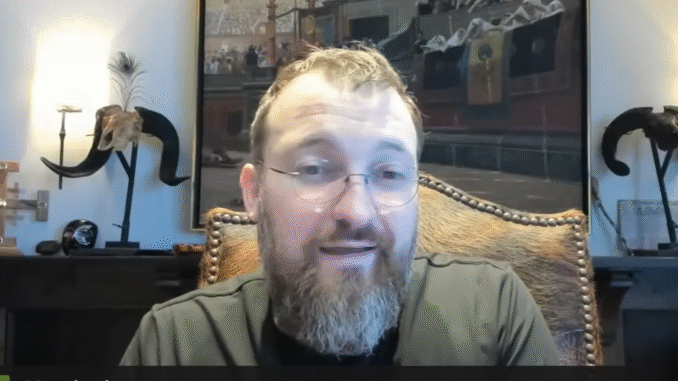
Charles Hoskinson, founder of Cardano and CEO of Input Output Global (IOG), revealed in a newly published interview that his company passed on a potential deal with the government of El Salvador due to serious legal and geopolitical concerns—specifically involving a proposed airdrop that would have included members of the MS-13 criminal gang.
Cardano Founder Rejected El Salvador Deal
The comments came during an appearance on The Shawn Ryan Show, where Hoskinson disclosed that his team was approached by El Salvador’s administration. According to Hoskinson, the discussions stalled almost immediately after the idea of a mass airdrop to the entire population—including individuals on international sanctions lists—was introduced.
“Bukele, for example, wanted to do an airdrop to everybody in El Salvador,” Hoskinson said, referring to President Nayib Bukele. “And we’re like, okay, but MS-13 is on an OFAC list. And so if we give Bitcoin to all these people, we’re facilitating a transfer of value to a terrorist organization. That’s no bueno.”
Hoskinson emphasized that distributing tokens to sanctioned individuals—whether knowingly or unknowingly—could be considered a violation of US federal law, particularly OFAC (Office of Foreign Assets Control) sanctions, and might invite prosecution or regulatory retaliation. “So Justice Department has to give a clearance and understand what the rules are and everything. We just couldn’t get there,” he said. “So we passed on the deal after a week, but it was just wild.”
Cory Bates, who posted the clip on X, underscored the gravity of Hoskinson’s claims, tagging prominent El Salvador Bitcoin advisors Max Keiser and Stacy Herbert and asking whether they believed the story. At the time of publication, neither Keiser nor Herbert had responded publicly.
However, Keiser’s past commentary on Hoskinson and Cardano paints a picture of longstanding hostility. In a series of posts from mid-2022, Keiser wrote: “Cardano: Centralized, and an obvious unregistered security headed up by Charles Hoskinson who his associates allege is a pathological liar.” He further claimed: “Reportedly, El Salvador tossed this crackpot loser out of the country when he showed up peddling scams.”
In another post, Keiser alleged that El Salvador had “standing orders not to let him operate” in the country. These accusations have never been formally substantiated, and Hoskinson has generally not responded to them publicly until now.
The new revelations add a controversial layer to the early narrative around El Salvador’s Bitcoin strategy, which has centered almost entirely around the country’s partnership with Bitcoin maximalists and the rollout of BTC as legal tender. Cardano, often dismissed by Bitcoin proponents as too academic or too centralized, had not previously been considered a serious contender in Bukele’s national crypto vision.
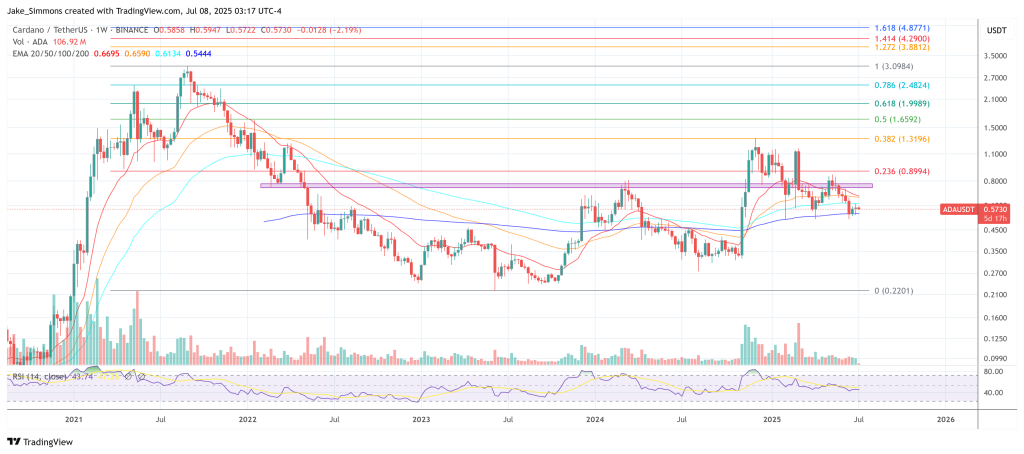
At press time, Cardano traded at $0.573.
Featured image created with DALL.E, chart from TradingView.com

Editorial Process for bitcoinist is centered on delivering thoroughly researched, accurate, and unbiased content. We uphold strict sourcing standards, and each page undergoes diligent review by our team of top technology experts and seasoned editors. This process ensures the integrity, relevance, and value of our content for our readers.



