Morning Minute is a daily newsletter written by Tyler Warner. The analysis and opinions expressed are his own and do not necessarily reflect those of Decrypt. And check out our new daily news show covering all of the top stories in 5 minutes or less, downloadable on Apple Pod or Spotify.
GM!
Today’s top news:
Crypto majors fall as oil spikes 7%; BTC -3% at $69,270
Fannie Mae to allow crypto collateral for mortgages
Whop partners with Aave and Plasma for new Whop Treasury product
Circle stock rebounds as analysts call selloff an overreaction
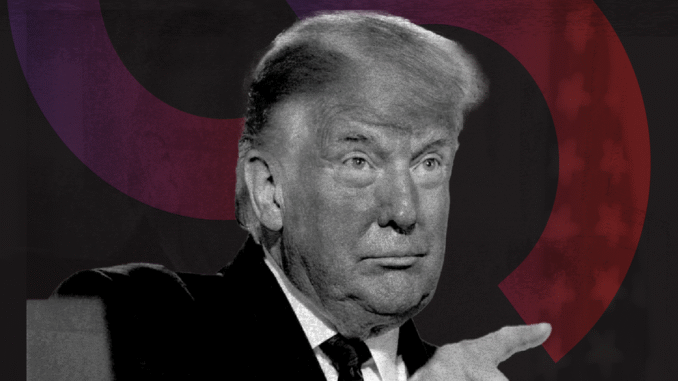
Trump appoints new Science & Tech advisory council with Silicon Valley heavy hitters and 2 notable crypto reps
🏛️ Trump’s New Science Council Is a Who’s Who of AI and Crypto
President Trump announced the first 13 members of his President’s Council of Advisors on Science and Technology (PCAST) on Wednesday.
But the real headline was the lineup he selected.
Jensen Huang, Mark Zuckerberg, Sergey Brin, Larry Ellison, Lisa Su, Michael Dell, and Safra Catz are all in. The council will be co-chaired by David Sacks, Trump’s AI and crypto czar, and former U.S. Chief Technology Officer Michael Kratsios.
And crypto has a seat at the table with Coinbase co-founder Fred Ehrsam on the council, along with a16z’s Marc Andreessen (arguably the most prominent crypto VC in the world).
The goal of the council is to advise the President on AI and emerging tech, keeping the US ahead of global competitors and “ensuring all Americans thrive in the Golden Age of Innovation.”
Key Details
13 initial appointees; council can expand to 24 members
Co-chaired by David Sacks (White House AI/crypto czar) and Michael Kratsios (former U.S. CTO)
Full list: Andreessen, Brin, Catz, Dell, DeWitte, Ehrsam, Ellison, Friedberg, Huang, Martinis, Mumgaard, Su, Zuckerberg
📈 Analysts Say Circle’s Selloff Was Overdone
Twenty-four hours after its worst day ever, Circle stock rebounded and many came to its defense.
Bernstein commented: “Don’t conflate stablecoin issuer with distributor.” Their point is that the Clarity Act’s yield restrictions target platforms that pass interest through to users (like Coinbase), not Circle itself, which earns income on reserves but doesn’t pay yield directly to holders.
Bitwise CIO Matt Hougan called the selloff “overblown,” noting that yield hasn’t been the primary driver of stablecoin adoption; most stablecoins don’t pay interest yet the market has grown to $200B+ because they make it easier to move dollars globally.
Cathie Wood’s Ark Invest bought the dip, purchasing 161,513 shares of CRCL across three ETFs on Tuesday, around ~$16.3M at day’s close.
Key Details
CRCL bounced ~7% Wednesday after closing down 20% Tuesday
Bernstein: Outperform, $190 target; Clear Street: Buy, $152 target; Bitwise CIO: “overblown”
Ark bought 161,513 CRCL shares (~$16.3M) on Tuesday across ARKK, ARKW, ARKF
💸 Whop Embeds Aave Into Its Platform
Whop, the e-commerce platform that processes $3 billion in annual payouts for over 21 million creators, community builders, and software sellers across 144 countries, launched Whop Treasury this week.
Whope Treasury is a yield product built directly into the platform powered by Aave, Plasma, and Tether.
The mechanic is simple from the user’s side: opt in, and your idle Whop balance starts generating up to 6% APY automatically. Under the hood, funds are converted to USDT0 on Plasma, routed through a Veda vault into Aave’s lending markets, and autocompound continuously – no gas, no wallet management, instant withdrawals (none of the onchain crypto headaches).
The infrastructure stack is notable too: Tether (which made a strategic investment in Whop earlier this year) provides the stablecoin layer, MoonPay handles onramps, and Tether’s own Wallet Development Kit powers the wallet infrastructure. BTC and ETH support are on the roadmap.
Most of Whop’s users have never touched DeFi. They won’t have to.
This is the story Aave founder Stani Kulechov has been telling for two years: DeFi’s liquidity is most powerful when it reaches users who will never interact with Aave directly. Whop Treasury is the first large-scale example of that thesis playing out.
Twenty-one million people who run online businesses just became DeFi users – without even knowing it. This is how crypto and Defi grows…
Key Details
Whop Treasury offers up to 6% APY on idle balances; real-time accrual, no minimums, instant withdrawals
Yield powered by Aave via Veda vault on Plasma network; fully non-custodial
Whop processes $3B in annual payouts across 21M users in 144 countries
⚛️ Google Sets a 2029 Quantum Deadline
Google published a formal 2029 timeline to transition its entire infrastructure to post-quantum cryptography Tuesday, calling the threat “closer than it appears.”
Android 17 will integrate ML-DSA, a NIST-standardized quantum-resistant algorithm, and Google Cloud is following. IBM has its own fault-tolerant quantum roadmap targeting the same year.
Google isn’t saying quantum computers will break cryptography by 2029 specifically, but it does plan to be ready in advance.
For Bitcoin, the near-term threat remains distant but looming. Jameson Lopp, co-founder of Casa, told Decrypt: “We are several orders of magnitude away from having a cryptographically relevant quantum computer.”
Bitcoin developers aren’t asleep, though; BIP 360, a quantum-resistant address format, was recently merged into Bitcoin’s formal improvement repository. The real risk to monitor for Bitcoin is coordination speed: migrating billions in user funds across a decentralized network without central authority could take 5-10 years on its own. And the quantum clock is ticking…
Key Details
Google set 2029 as its deadline for full post-quantum cryptography transition
IBM also targeting fault-tolerant quantum systems by 2029
BIP 360 (quantum-resistant address format) recently merged into Bitcoin’s improvement repository
₿ Bitcoin ETFs Are Almost Back to Even for 2026
Spot Bitcoin ETFs pulled in nearly $2.5 billion over the past month, nearly erasing all year-to-date outflows.
Bloomberg Intelligence analyst Eric Balchunas called it “incredible fortitude” in the face of a 40% price drawdown, Iran war escalation, and persistent macro headwinds.
For comparison, when gold fell 40% roughly a decade ago, about one-third of investors exited. Bitcoin ETF holders mostly stayed put. IBIT has already flipped positive for the year and ranks in the top 2% of all ETFs by YTD flows.
The institutional bid has held through a war, a Clarity Act shock, a Circle collapse, and the lowest Fear & Greed reading in months. With $15B in Bitcoin options expiring Friday, one more strong inflow day would push full-year ETF flows positive, setting up a notable narrative shift heading into the weekend.
Key Details
Bitcoin ETFs pulled in ~$2.5B in the last month, nearly erasing all 2026 outflows
IBIT already flipped positive for the year; top 2% of all ETFs in YTD flows
Nine inflow days exceeding $150M in March; peak was $458M on March 2
🌎 Macro Crypto and Markets
Crypto majors are red as oil goes higher once again; BTC -3% at $69.3k; ETH -5% at $2,070; SOL -5% at $88; HYPE -4% at $39.20
M (+17%), HASH (+5%), and NIGHT (+2%) led top movers
Oil +7% at $94; Gold -3% at $4,450
Robinhood’s HOOD stock rose after announcing a $1.5B share buyback, its largest repurchase program ever
Franklin Templeton and Ondo Finance are teaming up to offer 24/7 tokenized ETF trading on-chain, putting the $1.7T asset manager’s weight behind Ondo’s institutional DeFi infrastructure
Cipher Digital pivoted from Bitcoin mining to AI, signing a 15-year data center deal; the latest miner converting excess power infrastructure to AI compute
Visa joined the Canton Network as a Super Validator, expanding its role in institutional blockchain settlement infrastructure
McLaren Racing joined the Hedera Governing Council, becoming the latest major brand to take a governance seat on an institutional blockchain network
Corporate Treasuries & ETFs
The Bitcoin ETFs saw $7.8M in net inflows on Wednesday, while the ETH ETFs had $8.5M in net outflows
BitMine launched MAVAN (Made in America Validator Network), its in-house Ethereum staking platform; Tom Lee said MAVAN will soon be the largest ETH staking platform in the world and the firm expects $272M+ in annual staking yield
CoinShares launched new ETFs offering investors exposure to Bitcoin volatility as a standalone asset class
Meme Coin Tracker
Meme majors were mostly red; DOGE -6%, SHIB -5%, PEPE -4%, TRUMP -6%, PENGU -6%, SPX -6%, FARTCOIN -8%
Testicle (+23%), Wojak (+58%) and CopperInu (+40%) led top movers
💰 Token, Airdrop & Protocol Tracker
Whop announced partnerships with Aave and Plasma to introduce 6% yield to its treasury
TradeXYZ founder teased a significant product launch coming soon, along with new stocks (DraftKings, Hims, Costco and Lilly) live on the platform
Walrus launched MemWhal as a new long-term memory layer for AI agents, built on Sui
Jupiter introduced its CLI allowing agents to interact across spot, perps, lending and predictions
🚚 What is happening in NFTs?
NFT leaders were mostly even; Punks even at 29.4 ETH, Pudgy even at 4.13 ETH, BAYC even at 5.25 ETH; Hypurr’s even at 409 HYPE
AKCB (+23%) and Doodles (+5%) led notable movers
An Autoglyph sold for 42 ETH ($92,000) after previously being bought for 375 WETH back in 2022
NFT NYC 2026 confirmed for September 1-3
Daily Debrief Newsletter
Start every day with the top news stories right now, plus original features, a podcast, videos and more.